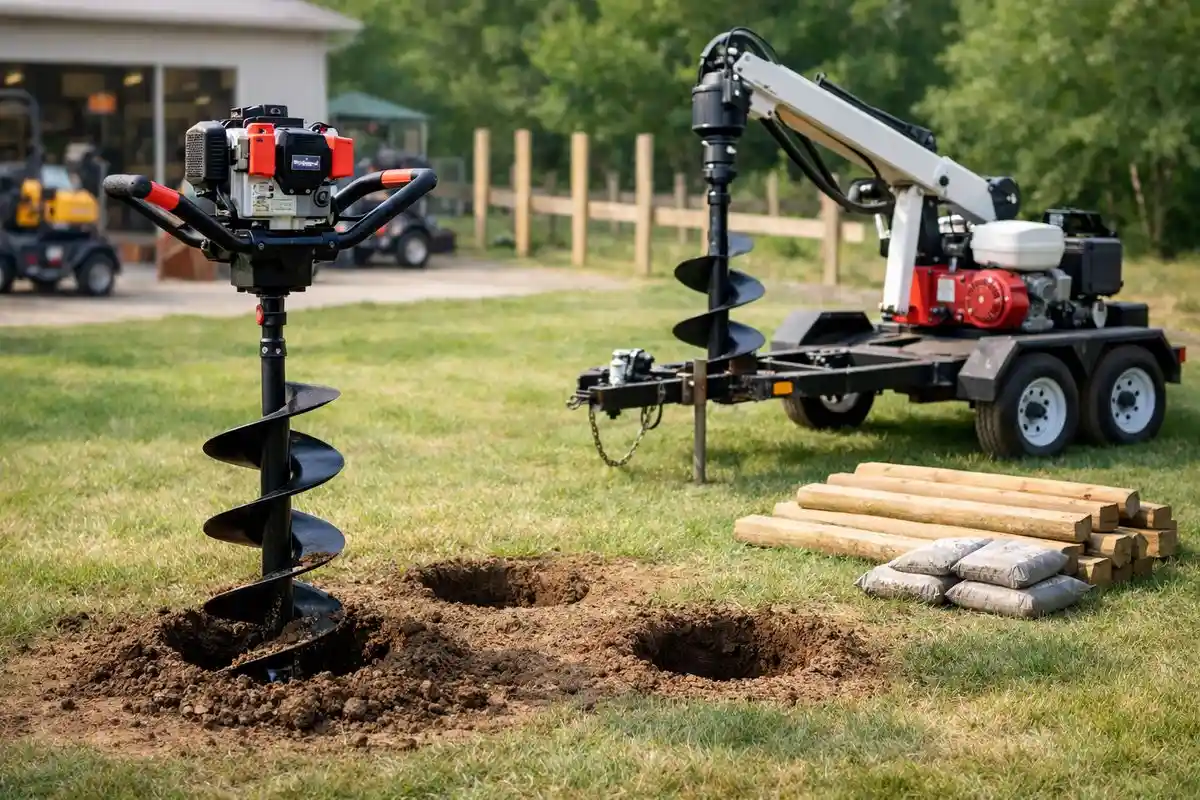
A fence job looks easy until the first hole turns into a wrestling match with clay, roots, and a machine that feels twice as heavy as expected. A good post hole digger rental fixes that problem, but only if you choose the setup that matches your yard instead of the biggest tool on the lot.
Post Hole Digger Rental at a Glance
A post hole digger is a powered auger, basically a motor that spins a digging bit to bore clean holes for fence posts, deck footings, signs, and larger plantings. For a one-weekend job, renting usually beats buying by a mile. Purchase prices commonly run from $500 to $3,000, while daily rental pricing often starts around $60 for a one-man unit, about $75 for a two-man model, and roughly $135 for hydraulic options, based on rental market data summarized by Quipli.
The specs that matter are simple: power type, operator count, auger bit size, digging depth, weight, and transport. Ignore the rest at first. If the machine is too heavy for you to control, too weak for your soil, or too wide for your side gate, it is the wrong rental.
How to Choose the Right Setup for Your Project
The trick is to think in this order: how many holes, what kind of soil, what size posts, and how comfortable you are with a heavy tool that can kick when it catches. That tells you more than horsepower alone. If you are new to rentals in general, it helps to start with a broader guide to booking equipment without surprises .
Match the rental to the number of holes
For a mailbox, a couple of deck supports, or a short garden structure, a one-man model is usually enough. It is easier to load, easier to turn in tight spaces, and less of a hassle for a half-day project.
Once your project starts looking like 15, 20, or 30 holes, the math changes. Spending an extra bit on a stronger machine can save hours and a sore back, especially if your fence line runs the full side yard.
Check your soil before you book
Soil is the catch that changes everything. Loose soil and sandy ground are friendly. Packed clay, dry summer ground, stones, and roots are not. In places like Calgary or southern Ontario after a dry week, the top layer can feel almost baked.
Torque just means twisting power. More torque helps the bit keep turning when the ground pushes back. If your yard has roots or stubborn clay, a light-duty model can become frustrating fast. For a deeper look at bit styles and basic auger choices, this guide to digging fence and post holes with the right tool is worth a quick read.
Pick the right auger bit size
Bit size should match your post and the concrete around it. A 4-inch or 6-inch bit works for small posts and light-duty tasks. An 8-inch or 10-inch bit is more common for residential fence posts. Go wider when you need extra concrete, more stability, or larger deck supports.
Too small, and you fight the hole. Too big, and you create more work than you need.
One-Man Post Hole Digger Rental Review
This is the best starting point for most homeowners. It is affordable, common, and good enough for many backyard jobs. It is also the setup most likely to surprise you with kickback if the bit grabs a root.
Best uses for a one-man model
A one-man unit shines on small jobs, lighter soil, and yards where access is tight. It is the easiest version to transport in an SUV, pickup, or small trailer, and the easiest to return before the rental clock turns annoying.
Setup and onboarding experience
At pickup, expect a quick walkthrough on fueling, choke and throttle positions, starting steps, and bit attachment. Before leaving, ask how to restart a hot engine, how to swap bits, how deep it can dig, and whether the machine will fit your vehicle safely. If you are comparing local shops, finding a rental place that actually explains the tool clearly matters more than saving five dollars.
Performance in real yard conditions
In cooperative soil, this setup is the best value for small residential projects. You can move hole to hole quickly and keep control without needing a second person. But once the bit catches, you notice the weight immediately. Fatigue builds fast after a few holes, and the machine can twist hard enough to remind you to keep a firm stance, gloves, boots, and eye protection on from the start.
Two-Man Post Hole Digger Rental Review
A two-man unit sounds easier because you split the load. Sometimes that is true. Sometimes it feels like carrying a couch up basement stairs, better in theory, awkward if your timing is off.
When the extra power pays off
This setup makes sense for more holes, denser ground, and larger posts. Compared with a one-man machine, you get more power and better stability once the bit starts digging. If your project is a full fence line in average-to-tough soil, the daily rate bump is usually worth it.
Handling, safety, and teamwork
The extra handles help when the auger bites into clay or snags a root, but coordination matters. If one person reacts late, the machine feels clumsy fast. Good communication is part of safe operation. Clear the area, mark utilities before digging, and do not rush just because the tool looks more capable.
Hydraulic Post Hole Digger Rental Review
Hydraulic models are the heavy hitters for homeowners who want speed and control in hard ground. For packed clay or repeated drilling, this is the setup that saves your back and your weekend.
Best for tough soil and bigger projects
Hydraulic power is the smart pick when the yard fights every hole. You get steadier drilling, less wrestling, and better performance in dense soil. If a one-man machine is fine for six easy holes, a hydraulic unit is what makes 25 hard holes realistic in a day.
Transport, attachments, and site access
The catch is access. Tow-behind or larger hydraulic units need space, and the best rental on paper is useless if it cannot get through your gate. Before booking, measure side-yard width, check trailer requirements, and confirm bit options. This is the same kind of practical planning that helps with other outdoor jobs, like choosing yard equipment that is actually worth renting .
Rental Pricing and Value Breakdown
For most homeowners, renting wins because ownership makes no sense after the project ends. A one-man unit at about $60 a day, a two-man at about $75, and a hydraulic model around $135 gives you short-term access without maintenance, storage, or a machine sitting unused until next summer.
What affects the final rental bill
Sticker price is only the start. Extra bits, fuel, delivery, deposits, and damage waivers can push the total up. A cheap daily rate is not a bargain if the auger teeth are worn out or the correct bit costs extra.
Is daily, weekend, or weekly rental the better deal?
Weekend rentals are often the sweet spot for fence and landscaping jobs. The trick is to line up utility locates, spray paint your hole positions, and have posts and concrete ready before pickup. That same timing mindset saves money on other short jobs too, especially if you are also planning cleanup with a pressure washer later .
What to Look for in a Good Rental Experience
The machine is only half the story. A good rental yard or local listing on lend-it.ca helps you choose the right setup, confirms the bit size, and gives you a clear handoff instead of tossing you the keys and pointing at the door.
Signs the equipment has been maintained properly
Check for bent augers, worn teeth, fluid leaks, loose handles, and hard starting. If controls feel sloppy or the bit looks abused, ask for another unit. A well-kept tool usually shows it in the first 30 seconds.
Questions to ask at pickup
Ask about digging depth, restart procedure, operation in rocky soil, what to do if the bit gets stuck, and the fuel type. Those five questions save a lot of grief.
Pros and Cons of Renting a Post Hole Digger
Renting keeps upfront cost low, avoids storage, and gives you access to stronger equipment than you would likely buy for occasional use. It also fits the reality of Canadian projects, busy spring weekends, summer fence runs, and the odd fall yard upgrade.
The downside is time pressure. You need transport, decent weather, and a plan. Peak season can also thin out availability, so booking late is a good way to end up with the wrong machine.
Who a Post Hole Digger Rental Is Best For
A rental makes the most sense if you have a defined project and want the tool gone as soon as the holes are done.
Best fit
You get the most value if you are building a fence, setting a few deck footings, or doing one concentrated landscaping push with clear site access and a realistic weekend timeline.
Who should skip it
Skip the rental if your ground is extremely rocky, access is terrible, or the project is huge. In those cases, a contractor, a manual digger for one or two holes, or a heavier specialty solution makes more sense.
Final Verdict and Rating
For typical homeowner jobs, post hole digger rental gets a strong 8.5 out of 10 for value, convenience, and project fit. The best choice is usually a one-man model for small jobs, a two-man unit for longer fence runs, and hydraulic power for hard ground that refuses to cooperate.
This week, count your holes, check your soil, and book the setup that fits the job instead of the biggest machine available.
Frequently Asked Questions
How long should you rent a post hole digger for?
For most backyard jobs, a half day or full day is enough if your layout, utility locates, and materials are ready before pickup. Weekend rental is better for fence projects with 10 or more holes.
Can you use a post hole digger in clay soil?
Yes, but clay is where power matters. Dry, packed clay often calls for a two-man or hydraulic unit, especially in summer.
What size auger bit do you need for fence posts?
An 8-inch or 10-inch bit is common for residential fence posts. Smaller bits suit lighter posts, while wider holes help when you want more concrete around the post.
Is renting better than buying?
For occasional projects, yes. Renting is far cheaper up front, and you do not need to store, maintain, or fuel a machine you may not touch again for a year.
What should you bring when picking up the rental?
Bring tie-down straps, gloves, sturdy boots, and a vehicle that can safely carry the unit. Also bring your hole measurements so you can confirm the right bit before leaving.